
Australia should set immigration targets to achieve a ‘stable temporary population’, report says
Experts say our preoccupation with net overseas migration figures has distracted from a more meaningful discussion on the ‘scale of temporariness’
OCEANIA
The Vortex Team
4/30/20261 min read


A new report suggests Australia should set clear immigration targets to maintain a more “stable temporary population,” as the number of non-permanent residents continues to rise and puts pressure on housing and public services.
Over the past 15 years, temporary migrants have grown significantly, increasing from 2.7% of the population in 2010 to over 6% today.
Experts from the Australian National University argue that focusing only on net migration numbers has overlooked a key issue: the overall scale of temporary migration. According to the report, better management of temporary residents is needed to address concerns around infrastructure, housing, and social cohesion.
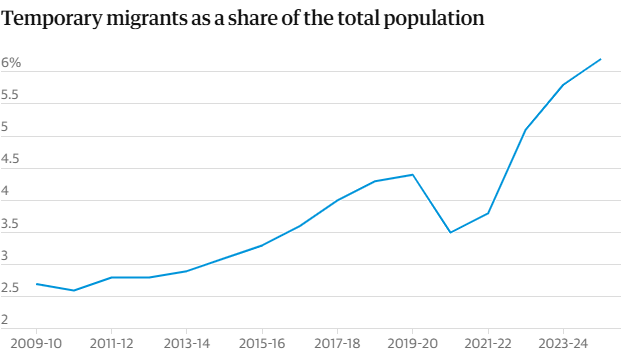
Source: ANU. Notes: Excludes New Zealanders on special category visas
Global Migration Debate: Lessons from Canada’s Reset
The rebound in migration after pandemic border closures has sparked debate across developed countries about their capacity to handle rapid population growth.
Canada responded in late 2024 with a major policy shift, introducing caps on temporary migrants to reduce their share of the population from 7.6% to 5%. While this has helped ease housing pressure, it has also contributed to a population decline for the first time since the 1940s.
Experts say there are lessons to learn, but caution against reacting too quickly. Research from the Australian National University suggests that focusing on the total number of temporary migrants rather than just net migration is the more effective approach.
The report recommends that Australia manage temporary migration more strategically, aligning it with infrastructure capacity and long-term settlement planning. The goal is not to reduce migration entirely, but to create a more stable and sustainable system.